

Direct Write-Off vs Allowance Method in Accounting

Recognizing bad debt expense is crucial for businesses because it provides a more accurate representation of the company’s actual revenue. By accounting for potential losses from uncollectible accounts, companies can better assess their financial health and profitability. Choosing the right method for accounting for bad debt is essential for accurate financial reporting and compliance with accounting standards. The Direct Write-Off Method is simpler but less accurate, as it does not adhere to the matching principle and can result in significant fluctuations in reported earnings.
Offer a Detailed Example of How to Estimate and Adjust Allowances for Bad Debt
It also ensures that the loss booked is based on actual figures and not on appropriation. But it violates the accounting principles, GAAP, matching concepts, and a true and fair view of the Financial Statements. Despite general non-compliance with GAAP, the Direct Write-Off Method remains acceptable in two limited circumstances. If bad debt losses are immaterial to the overall financial position, GAAP permits the use of the DWOM. As a result, using the Direct Write-off Method to book for uncollectible receivables is not recommended. Instead, the corporation should look into other options for booking bad debts, such as appropriation and allowance.
B2B Payments
While both allowance and direct write-off methods are used to write off bad debt in the accounting books of a company, the former is considered to be more accurate. This is direct write-off method because the allowance method follows the matching principle and complies with accounting standards such as GAAP. GAAP prioritizes the accurate matching of revenue and expenses over simplicity. Companies seeking external funding must generally avoid the DWOM for their primary financial statements. The method is unsuitable for material amounts of accounts receivable because it misrepresents assets and earnings.
Q1. Why is the allowance method preferable to the direct write-off method?
- HighRadius stands out as a challenger by delivering practical, results-driven AI for Record-to-Report (R2R) processes.
- Step two is the standard collection entry to record the physical receipt of the funds.
- The direct write-off method of accounting for bad debt isn’t accepted under the GAAP guidelines as it does not follow the matching principle.
- It’s also important to note that unpaid invoices are categorized as assets, which are debited in accounting.
- This entry removes the uncollectible receivable from the accounts receivable balance and reduces the allowance for doubtful accounts accordingly.
You credit the Accounts Receivables account with the remaining $2,500 you should have received, and debit the Bad Debt Expense account Coffee Shop Accounting with the same. Unfortunately, this will give a false sense of your business’s Accounts Receivable. It will result in an inflated revenue in the previous period, but understated value in the next. GoCardless helps you automate payment collection, cutting down on the amount of admin your team needs to deal with when chasing invoices.
- HighRadius is redefining treasury with AI-driven tools like LiveCube for predictive forecasting and no-code scenario building.
- This entry adjusts the allowance for doubtful accounts to the required level, ensuring that the financial statements accurately reflect the estimated uncollectible receivables.
- Understanding and managing bad debt expense is crucial for maintaining the integrity of a company’s financial reporting and ensuring its long-term financial stability.
- You can deduct bad debts from your total taxable income when filing a company tax return.
- The bad debt written off is accurate as it is based on the actual uncollectible amount.
- Costs and revenue must match throughout the entire accounting period, according to GAAP.
Nobody likes bad debt, and you can help mitigate the risk by keeping careful track of your invoices and payments with online invoicing software like InvoiceBerry. For smaller businesses, the simpler direct write-off method may be useful for recording infrequent bad debt incurred. If you provide wholesale products to other business clients, you may need to offer them more flexible payment terms. For example, one of your biggest clients has outstanding credit with you for $12,000, as a result of a long-standing business relationship.
- You realise after a few months of attempting to collect on the $600 invoice that you will not be paid for your services.
- An estimate of potential future bad debts that allows companies to prepare financial statements that better reflect potential losses.
- Businesses often grapple with the challenge of uncollectible accounts receivable.
- This method contrasts with the Allowance Method, where an estimate of bad debts is made in advance.
- This occurs when customers, due to various reasons, are unable or unwilling to pay the amounts they owe for goods or services purchased on credit.
Pro: It’s simple

Bad Debt Expense increases (debit), and Allowance for Doubtful Accounts increases (credit) for $150. This journal entry takes into account a credit balance of $100 and subtracts the prior period’s balance bookkeeping from the estimated balance in the current period of $250. Thus it is important to note that the percentage of receivables approach considers any existing balance in the allowance when calculating the amount of bad debt expense.
Bad Debt Write-Off Journal Entry Examples
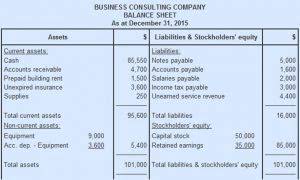
The balance sheet method (also known as the percentage of accounts receivable method) estimates bad debt expenses based on the balance in accounts receivable. The method looks at the balance of accounts receivable at the end of the period and assumes that a certain amount will not be collected. Accounts receivable is reported on the balance sheet; thus, it is called the balance sheet method. The balance sheet method is another simple method for calculating bad debt, but it too does not consider how long a debt has been outstanding and the role that plays in debt recovery. Understanding the Direct Write-Off Method is crucial for anyone involved in managing a company’s financial records.